

- feel tired or drained when spending time at home
- struggle to keep their space tidy even after cleaning
- wish to creating order, comfort, and harmony in their everyday life
- wish to care more deeply for themselves, their family, and their daily living environment
In this article, I would like to introduce one of Spirit Dance World’s (SDW) services: Well-Being Life & Space Design, a gentle support service that helps clients organize their home, office, or personal spaces and create harmony in their daily lives. I will share information about our trial monitor program, designed for those who wish to enjoy a beautifully organized, comfortable living or working environment but find it challenging to make lasting changes on their own.
What is a Well-Being Life & Space Design?
Unlike the traditional image of a housekeeper or someone “who simply does things for you”, this is a guided support program designed to help clients gradually create and maintain a beautiful, comfortable environment on their own, or together with their family.
This service is offered through SDW’s unique perspective on self-care and a Japanese-inspired way of life. The client is always the main creator, and as the Well-Being Life Designer, I provide both guidance and hands-on support to help you build a living environment that reflects your values and daily rhythms.

The Integration of Four Key Perspectives in a Well-Being Life & Space Design Service
It is a comprehensive support service that cares not only for the appearance of your space, but also for the flow of daily life, your mindset, and the inner aspects that influence your overall wellbeing – something you and I create together.
The State We Aim to Create
- A living environment and daily rhythm that feel optimized and aligned
- A calm, resilient mind and body that remain steady even when life becomes stressful
In a Well-Being Life & Space Design, I support not only the organization and clearing of your space, but also the inner aspects that help you maintain this harmonious state with ease, such as your mindset, your relationship with your belongings, and your overall approach to daily living.
The Final Goal
The ultimate goal of a Well-Being Life & Space Design is to help you establish long-lasting life skills that support both outer and inner harmony. By refining the foundations of daily living, I aim to create a stable base that allows you to thrive in your social life and cultivate both economic and emotional independence. As a companion who helps strengthen the foundations of your home and daily life, I am committed to delivering this value with care and intention.
Benefits
From my own experience, I can say that having an organized environment whether at home or at work can lead to meaningful outcomes.
Invitation to the Well-Being Life & Space Design – Trial Monitor Program
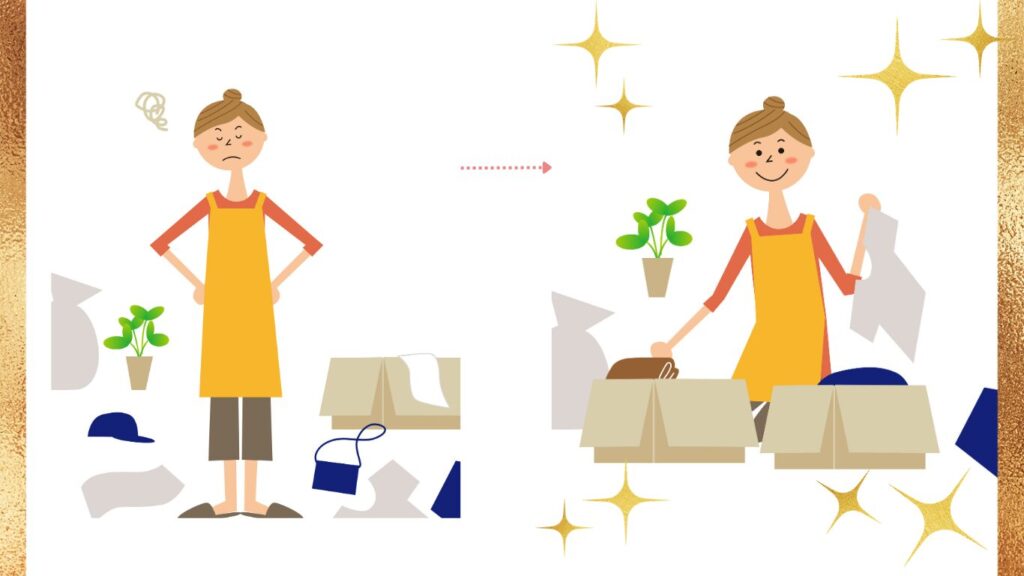
In preparation for the official launch of the service in 2027, I have established a trial period to support ongoing improvements. During this phase, I would greatly appreciate receiving your sincere opinions and impressions.
For the first phase of this program, I am seeking clients who are considering organizing their home or office. Whether it is a single room or a specific area, both are welcome. If you are interested, please review the Trial Monitor Program article using the button below and submit your application.
About the Well-being Life Designer

In this section, I would like to share how my natural strengths gradually aligned with the field where I can genuinely support others as a Well-Being Life Designer. I believe this background will serve as an important reference for you when considering whom to welcome into your home. And if you feel that the service I offer might be a good fit for you, I would be honored to walk alongside you.
My Early Childhood
I grew up as the younger daughter in a family of four, my father, my mother, and my sister, who is two years older than me. We lived in the quiet countryside of Shikoku, surrounded by my father’s relatives, in a home filled with warmth. My mother, who was born and raised in Kyushu, balanced the household with joy while honoring my father.
Because both of my parents were the youngest in their large families, my sister and I were given the freedom to grow at our own pace. In that gentle and generous environment, I nurtured creativity, a sense of initiative, and a deep sensitivity that has become one of the greatest strengths guiding my life today.
When my sister and I were in the early years of primary school, our mother entrusted us with a daily household task. After she prepared our evening meal, one of us was responsible for washing the dishes, drying them, and returning them to the cupboard, while the other wiped the table and swept the floor.
We took turns doing these two roles, switching every other day, and continued this routine together.
One day, my mother called me over and said: “The area you touch always becomes so clean.” “You’re very good at tidying up.”
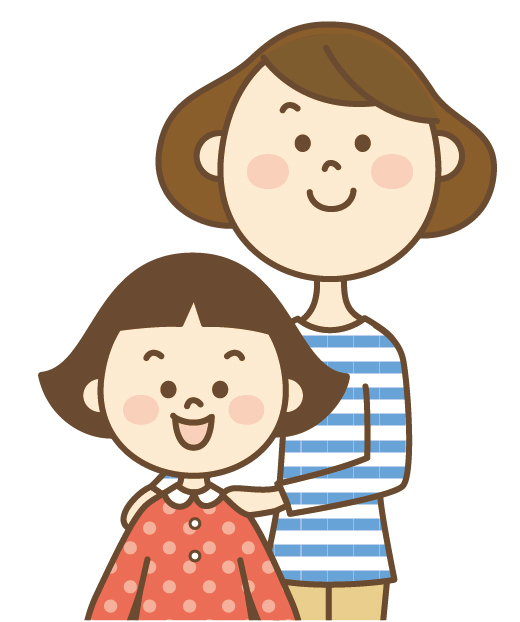
Her words stayed warmly in my heart, and even now, they remain one of my most important early foundations.
Until my mother praised me, I hadn’t noticed the difference between the way my sister tidied up and the way I did. But from that day on, I remember suddenly noticing the little “not-quite-finished” spots in the areas my sister cleaned (ha ha). At the same time, I felt happy thinking, “I’m really good at tidying up”, and a small sense of confidence began to grow inside me.
Even after that, it became natural for me to keep adjusting and trying different things, not only when tidying up, but also when rearranging my room or caring for the whole house, until everything reached a level that felt “just right” to me.
Washing the back of each dish carefully, folding handkerchiefs and towels so their corners lined up neatly were everyday habits. I was also the kind of child who would, on my own, straighten the direction of the towels everyone used, sweep the entrance or polish the darkened bottom of a pot. I enjoyed helping with things beyond simple tidying, simply because it felt satisfying to complete something.
And ever since I was little, I loved watching my mother cook in the kitchen, The way she moved so smooth, so capable, and always with a sense of enjoyment, felt incredibly comforting to me. Because I grew up eating her delicious home-cooked meals and seeing how much joy she brought into our daily life through her cooking, I naturally came to love cooking myself. (The illustration below shows a boy, but the feeling and image reflect exactly how I was.) I hope to use my cooking skills to support others in the future when the time feels right.
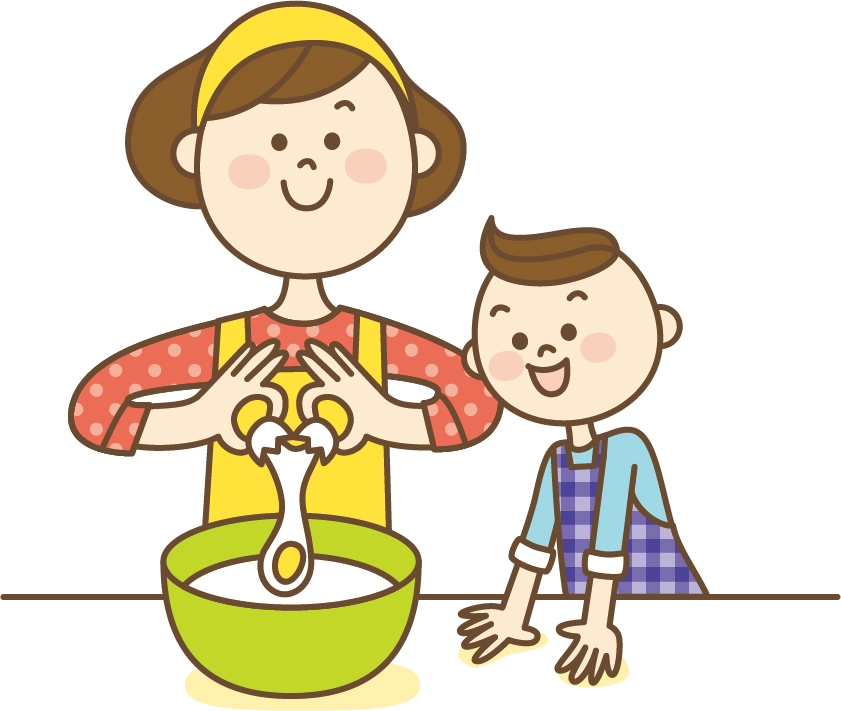
Perhaps that’s why, in my elementary school graduation essay, I wrote that my dream for the future was to become a “supporter”. What I imagined back then wasn’t just someone who tidied up or kept things organized. To me, a supporter was someone who wanted to be involved and help people who were aiming to achieve something, someone who offered care wherever it was needed.
Later on, I went into the field of caregiving, but that too felt like a natural extension of being a “supporter”. I think I was simply drawn to the kind of role where you stay close to someone’s daily life and gently offer your hand at the times when someone needs a little help.
Adolescence to Early Adulthood
As mentioned earlier, I grew up in a safe and warm environment where everything felt steady and supportive. But around my middle-school years, as adolescence began to influence my emotions, I found myself facing more confusion. Little by little, the balance of my feelings and daily life started to shift and become unsettled. (Those particular struggles from that time are described on a separate page.)
Around that same time, my parents began working from early morning until late at night, taking on a couple jobs to support my sister and me and to prepare for our future. As my sister entered high school and started spending more time with her friends, I remember sensing a gentle shift in the atmosphere at home. The feeling inside the house changed little by little, as if our family was quietly moving into a new stage of life.
My mother, who was always hardworking, managed the household skillfully whenever she could, even in the midst of her busy schedule. But whether she simply didn’t have enough time for tidying or it wasn’t her strongest area, there were moments when she would suddenly begin a full-scale cleaning session late at night, laughing as if the idea had just popped into her mind.
Noticing our mother suddenly starting her late-night cleaning, my sister and I would sit down beside her, glancing over at our father who always fell asleep the moment he got into bed. We would say things like, “If she starts now, I wonder what time she’ll finish”, and the three of us would chat together in a relaxed, cozy way while she continued tidying up.
Adulthood into Midlife
In my late twenties, after beginning my life in Australia, I visited my family home for the first time in a while and felt that the flow of energy in the house had somehow become stagnant. At that time, my sister and her husband were living there with their three young children, and the house had turned into a lively, crowded space filled with things, completely different from how it had been when I lived there.
A few years later, when I returned to my family home again, my mother was dealing with illness, so with my family’s permission, I moved the furniture that was blocking the flow of light and air and sorted through the unused items that had accumulated in the kitchen. By that time, there were enough things piled up that it took several trips with a small truck to clear them out.
Because I was approaching everything as someone coming from the outside, I realized for the first time that the family members living there had not noticed the situation themselves.
After the big cleanup was finished, several relatives and friends who visited my parents’ home said, “Miho-chan, please come to our place and help us tidy up too.” It happened more than a few times. Perhaps in Japan, where the idea of mottainai is deeply rooted, households in similar situations may not be uncommon. (Mottainai is a Japanese idea that reflects gratitude for things and a desire not to waste them)
As time went by, two years ago, my father, now living alone in his seventies, asked me to help organize the family home. We talked things through together and proceeded with the cleanup in a way that suited his current lifestyle and health. He even began wiping down surfaces with me and took the unused items out to be discarded, actively participating throughout the process. It took about two full weeks, but in the end he was delighted, saying, “It’s so much easier to use and put things back now!” and “I can feel the beautiful air in the house.”
I was also truly happy to be able to support my father, and more than anything, I deeply felt that, thanks to my family, I was able to discover what I’m good at and continue to develop that strength.
Discovering Wa no Kokoro – The Spirit of Harmony –
Although I’ve always been good at organizing and tidying up, and I genuinely enjoy cleaning, there was one thing I wasn’t good at. I struggled to maintain a home that was consistently clean and beautifully cared for.
For a long time, I had never actually seen anyone achieve that level of constant cleanliness, nor had I ever visited a home that was kept that way. Because of that, I simply assumed it was impossible.
One day, I finally met someone who truly lived in a home that stayed beautifully clean at all times. The moment I felt both curiosity, wanting to know how such a thing was possible, and a quiet admiration for her way of thinking and approaching daily life, two role models appeared before me almost at once.
Both of them were older Australian women, devoted homemakers. But at that time, I was still far from being able to imitate the amount of time and care they poured into their household routines, so I continued, as always, to experiment in my own way, trying different approaches and learning through trial and error.
Some time later, I had the opportunity to discover the traditional sensibility that Japanese people have cherished for generations, the heart of Wa.
It was reflected in the way craftsmen carefully tend to their tools, and in the everyday lives of mothers and grandmothers who treat their belongings with quiet respect. The value of an object does not lie in its price, but in the time, care, and love poured into making it, and in the spirit that resides within it.
That is the essence of Wa no Kokoro.
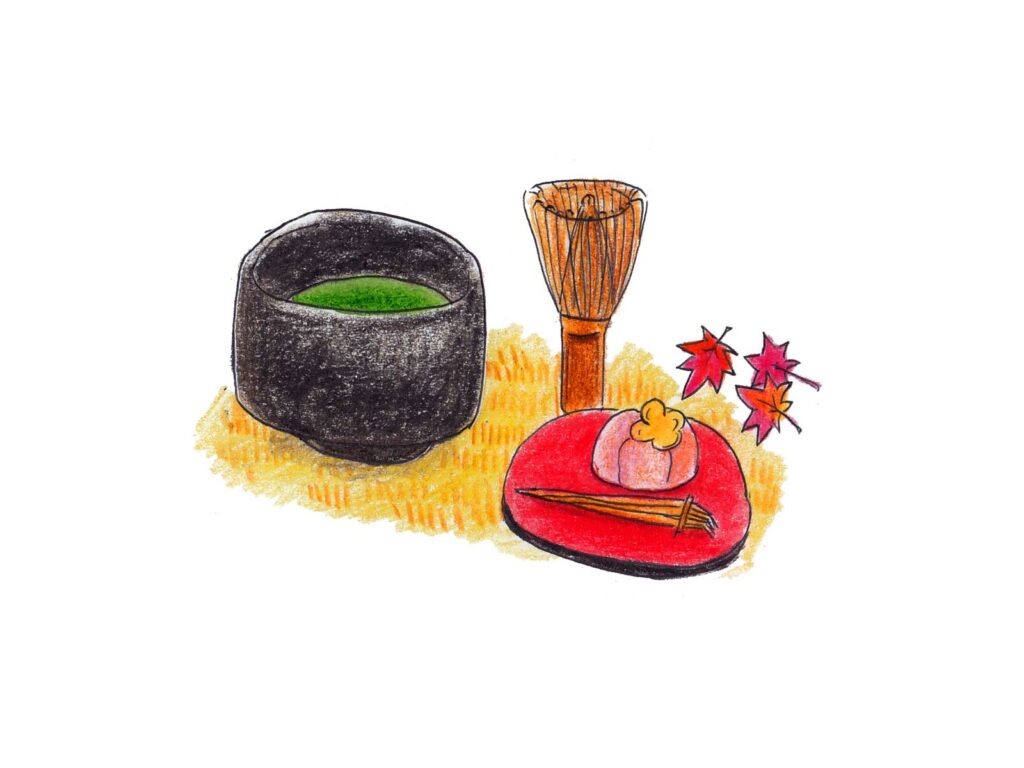
That way of thinking flowed into me with a kind of powerful clarity. From the moment I received Wa no Kokoro, I began to understand deeply and wholeheartedly that cleaning was not a routine task, but an act of offering love to the spirit that resides within the home and the things we live with.
Of course, understanding that heart didn’t mean I could suddenly do everything perfectly. Little by little, day by day, I began to model my movements after the gentle gestures shown by Japanese grandmothers and craftsmen, quietly weaving those ways of caring into my own daily life.
As I shifted my focus from simply “keeping things clean” to “preserving their beauty”, drawing out the quiet charm that each object holds, the way I related to my belongings, and even the way I moved, began to change.
It was slow progress, yet my gestures grew naturally graceful, almost like the gentle movements of my role models, whose way of caring has always carried a quiet, effortless beauty.
As I continued making small adjustments to suit my own lifestyle, I found that, after a few months, I was able to maintain beauty effortlessly.
For me, the idea that “every object carries a spirit” and that we should approach things with the heart of a craftsman has also settled into my life with surprising ease.
When I began to look at my daily life through that lens, I found myself wanting to cherish even more deeply the connection between my surroundings and my inner heart.
And believe it or not, my name, Mihoko, is written with the characters for “one who preserves beauty.”
I’ve heard that my maternal grandfather named me. It wasn’t until I became an adult that I realized how perfectly the meaning of the name I was given aligns with my own nature and the life path I am taking. I’m still amazed by my grandfather’s remarkable insight!!
In time, all of these deep understandings of what it means to be a Japanese person living in Australia, shaped by both cultures and their rhythms of daily life, became the origin of what later grew into my work as a Well-Being Life Designer.
By experiencing Harmony as a “calm and well-aligned heart,” I began to see that connecting daily life with that inner steadiness could help each person strengthen the foundation of their well-being, the base upon which life itself rests.
Supporting that foundation is one of the ways I feel I can contribute to society. For those who, like my own family, are not naturally skilled at organizing their living spaces, I believe in gently working together, chatting as we tidy, just as my mother and I once did, and solving each small challenge of daily life side by side. The foundation of one’s living, the essentials of what we call “home” is always better when it is steady, no matter where we live or what era we belong to.
As a Well-Being Life Designer, I look forward to the day I can support your daily life, walking beside you as you create a home that feels peaceful and truly your own.
About Service Plans
I am currently looking for clients who would like to participate in the Well-Being Life & Space Design trial monitor program, helping shape future service plans so that more people can create harmony in their daily lives.
If you are interested, please take a moment to review the monitor program. Thank you very much for considering it!!